
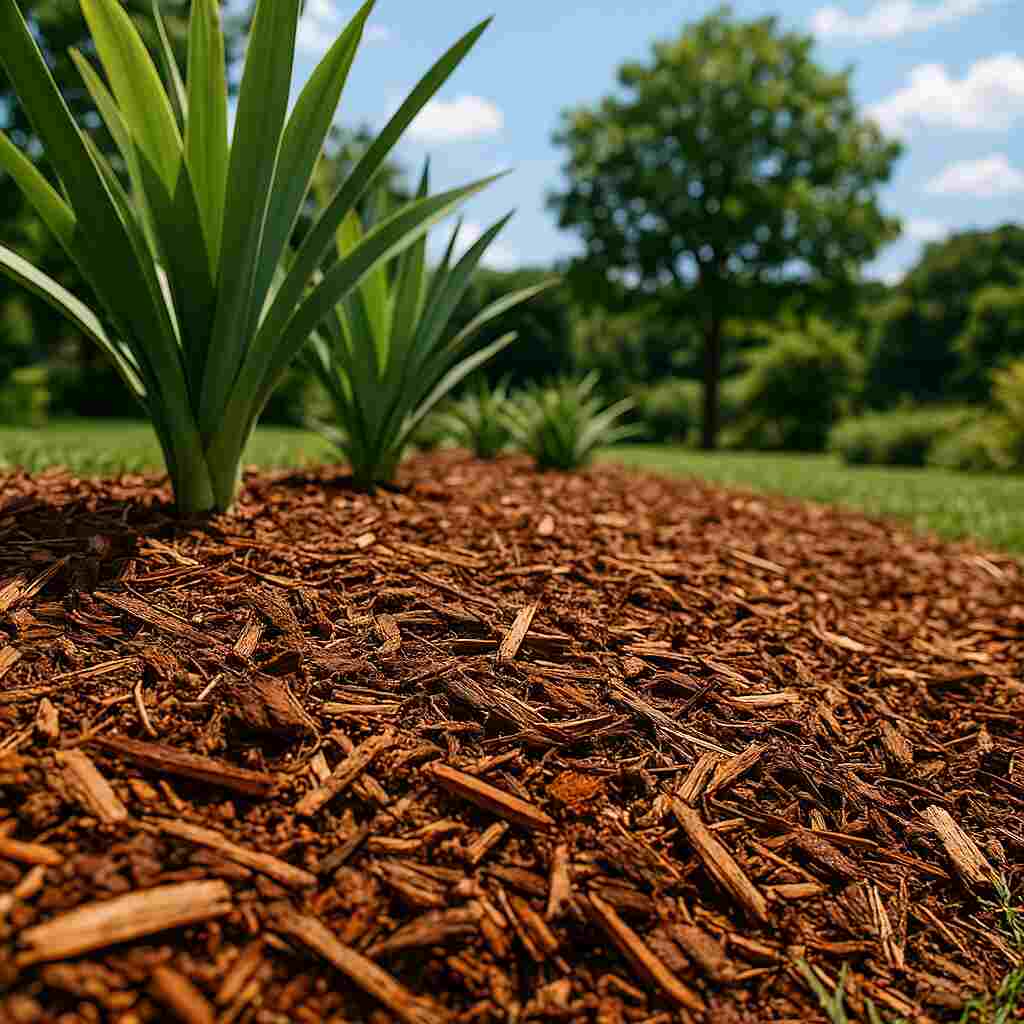
Why mulch matters in hot coastal gardens
Coffs Harbour summers are hot, humid, and sometimes harsh on plants. Gardeners along the Mid-North Coast know the challenge: keeping soil cool and moist while still letting roots breathe. Mulch is one of the simplest ways to protect your plants from drying out, especially through January and February when the sun feels strongest. But not all mulch is the same. The right type depends on your plants, your soil, and your goals for the garden.
Stick around and learn the best mulch options for Coffs Harbour’s unique coastal climate. We’ll look at organic mulch like bark and sugarcane, decorative options like pebbles, and practical choices like recycled green waste. We’ll also cover where to source quality mulch locally and why delivery is worth considering if you’re tackling larger jobs.
Understanding the Coffs Harbour climate
The Coffs Coast sits between subtropical and temperate zones. Summers often reach 28-32°C, with high humidity and bursts of heavy rain. This mix means mulch must handle two extremes: long, hot dry days and sudden downpours.
Without mulch, garden beds in suburbs like Toormina, Sawtell, Boambee, and Karangi dry out fast. Water evaporates from the surface before it reaches the roots. By covering soil with mulch, you lock in moisture, reduce weed growth, and buffer temperature swings.
The right mulch also improves soil health over time, which is especially useful in sandy coastal soils near Sapphire Beach or clay-heavy soils around Bonville.
Types of mulch available in Coffs Harbour
Bark mulch
Bark mulch is one of the most popular choices. It comes in different grades, from chunky pine bark nuggets to finer composted bark. In Coffs Harbour gardens, bark mulch:
- Breaks down slowly, so it lasts longer in the summer sun.
- Looks neat and natural, suiting landscaped front yards.
- Helps reduce weed growth.
It’s best around shrubs, trees, and flower beds where you want long-term coverage.
Sugarcane mulch
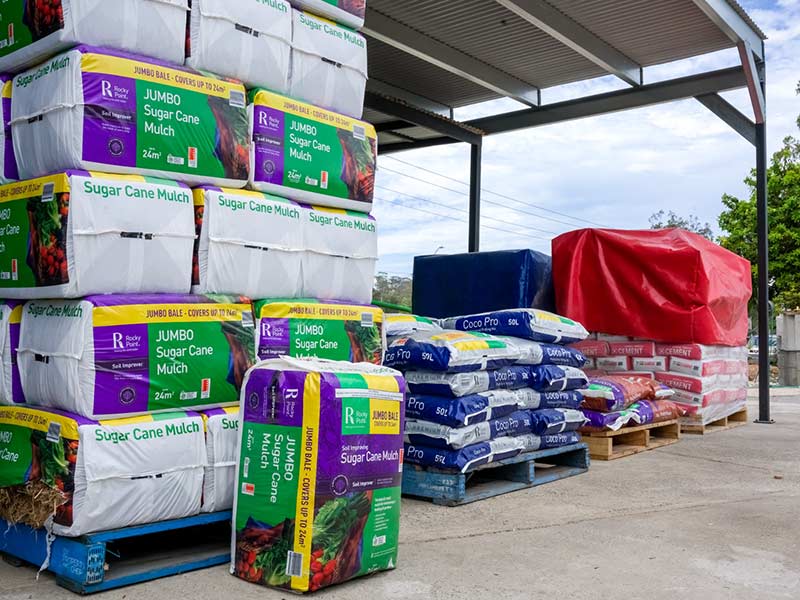
Sugarcane mulch is a favourite among veggie gardeners in Woolgoolga and backyard growers across Coffs Harbour. Benefits include:
- Light and easy to spread.
- Breaks down quickly, adding organic matter to soil.
- Keeps soil moist for shallow-rooted plants.
Because sugarcane breaks down faster, you’ll need to top it up more often. But for vegetable beds, fruit trees, and herbs, it’s perfect.
Woodchip mulch
Woodchips from recycled timber or green waste are widely used. In Coffs Harbour, MI Organics processes local green waste into clean, screened woodchip mulch. Advantages:
- Affordable and locally sourced.
- Good for large areas and budget landscaping.
- Creates a natural look in bushland gardens.
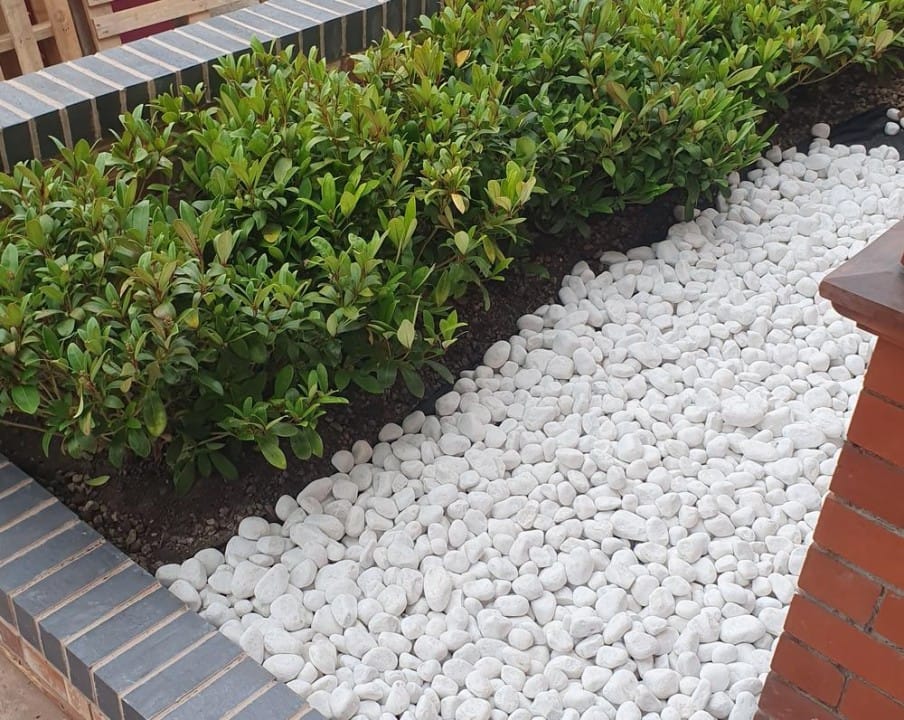
Decorative pebble mulch
For those who want a tidy, modern look, decorative pebbles are popular in Coffs Harbour’s coastal suburbs. Pebbles:
- Don’t break down, so they last for years.
- Reduce evaporation by shading the soil.
- Pair well with succulents and low-water gardens.
The main drawback is cost and weight – pebbles don’t improve soil and can heat up under full sun. They work best in low-maintenance areas.
Straw mulch
Straw is light, affordable, and quick to lay down. It suits veggie patches and new plantings, but it can blow away in strong summer winds along the Coffs Coast. Still, many gardeners like it for short-term use.
Compost mulch
Composted mulch is rich in nutrients and helps improve poor soils. In Coffs Harbour, many gardeners use composted mulch as a top-dressing under fruit trees and roses. It’s darker and blends into soil, making beds look tidy.
Choosing the best mulch for summer
Now that we’ve looked at the options, which mulch performs best in Coffs Harbour summers?
- For veggie gardens and herbs: Sugarcane or straw mulch.
- For ornamental gardens: Bark mulch for a tidy, lasting look.
- For large areas or budget projects: Woodchip mulch.
- For modern low-maintenance gardens: Decorative pebbles.
- For fruit trees: Composted mulch or sugarcane.
Mixing mulch types can also work. For example, bark mulch for long-term cover with compost mulch underneath to enrich the soil.
How much mulch do you need?
A common mistake is spreading mulch too thin. In hot Coffs Harbour summers, you’ll need at least 5-10 cm to get the full benefits. Less than that and weeds will poke through, while soil will still dry out quickly.
For larger yards in suburbs like Korora, Sandy Beach, or Emerald Beach, bulk delivery from MI Organics is usually the easiest option. Trying to move bagged mulch in summer heat can be exhausting.
Tips for applying mulch in coastal gardens
- Water the soil deeply before applying mulch.
- Don’t pile mulch against plant stems or tree trunks, it can cause rot.
- Use coarse mulch for windy spots near the beach, so it doesn’t blow away.
- Refresh mulch every year, topping up to the right depth.
Mulching mistakes to avoid
Even experienced gardeners sometimes make errors with mulch. Some common mistakes in Coffs Harbour gardens include:
- Too much mulch: Piling it on more than 10-12 cm deep can suffocate roots and stop water reaching the soil.
- Wrong mulch in the wrong spot: Pebbles around delicate herbs can overheat soil, while sugarcane around ornamentals may break down too quickly.
- Letting weeds grow first: Always weed before applying mulch, or you’ll trap them underneath where they’ll still compete with your plants.
- Neglecting to top up: Coffs Harbour’s summer sun burns through organic mulch faster than cooler climates. Keep an eye on it every season.
How mulch saves money on water bills
Beyond plant health, mulch has a real financial benefit. Water bills climb in summer when gardens dry out quickly. Mulch reduces evaporation, meaning your sprinklers or hoses don’t need to run as often.
Studies suggest mulching can reduce water use by up to 50%. In Coffs Harbour, where summer watering restrictions sometimes apply, that can make a huge difference. For homeowners, it means less time standing in the yard with a hose and more time enjoying the garden.
Best mulch for Australian native plants in Coffs Harbour
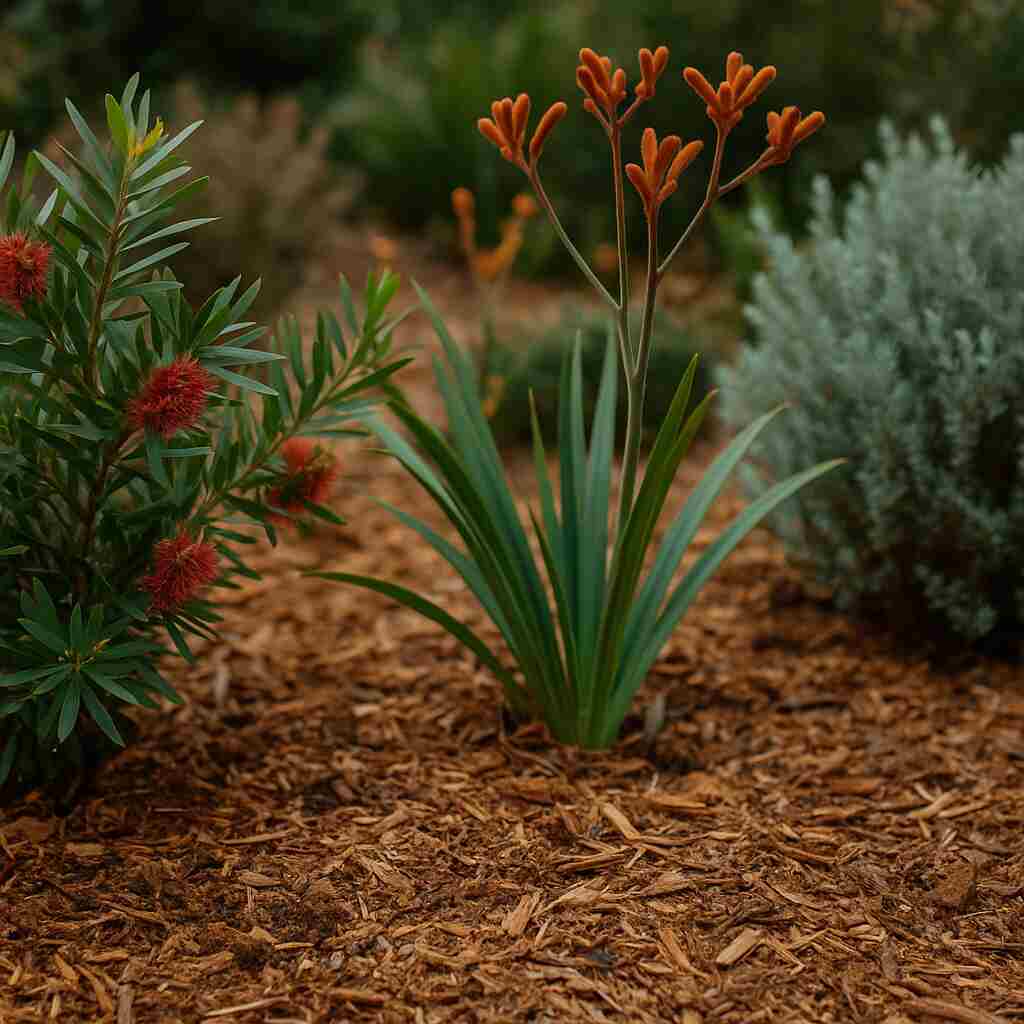
Native plants like grevilleas, wattles, and banksias thrive in well-drained soils. For these, a coarse mulch like bark or woodchip is best. It lets water filter through while keeping roots cool. Fine mulches that hold too much moisture can cause root rot, which natives dislike.
Using local mulch products also helps mimic natural bushland conditions. For example, recycled woodchip mulch suits native landscapes around Korora or Boambee. Decorative pebbles can also complement native rock gardens while reducing weeds.
Seasonal mulching tips
While summer is the peak time to mulch, thinking ahead each season helps keep your garden in top shape.
- Summer: Apply a thick layer to lock in moisture.
- Autumn: Top up mulch as plants prepare for winter dormancy. This also keeps weeds from taking over after summer rains.
- Winter: Check mulch depth around sensitive plants to prevent frost damage in cooler Coffs Harbour valleys.
- Spring: Refresh mulch around new growth, fruit trees, and veggie beds before the heat returns.
By treating mulching as a year-round routine, your garden will be healthier and more resilient to seasonal shifts.
Local benefits of choosing MI Organics mulch
When you buy mulch from MI Organics in Coffs Harbour, you’re supporting a business that recycles local green waste. Instead of ending up in landfill, garden cuttings are turned into clean mulch. This not only keeps prices affordable but also reduces environmental impact.
MI Organics offers a range of mulch products across all branches – Coffs Harbour, Grafton, Woolgoolga, Nambucca, and Townsend. That means whichever town you’re in, you can source bulk mulch close to home. Delivery services make it simple for homeowners, landscapers, and councils alike.
Frequently asked questions about mulch in Coffs Harbour
How often should I re-mulch my garden?
In the Coffs climate, organic mulches like sugarcane or straw need topping up every 6-12 months. Bark and woodchip mulches last longer, usually 1-2 years.
Can mulch attract termites?
Mulch itself doesn’t cause termite problems, but placing it directly against house foundations isn’t recommended. Leave a small gap between mulch and your home.
What’s the cheapest mulch option in Coffs Harbour?
Recycled woodchip mulch from MI Organics is affordable and ideal for big areas. If you need decorative mulch for feature beds, bark or pebbles are worth the extra investment.
Will mulch stop weeds completely?
Mulch reduces weeds, but some hardy weeds may still push through. A good layer (at least 5 cm) will make a huge difference.
Conclusion: keeping gardens thriving in Coffs Harbour summers
The right mulch can be the difference between a struggling garden and one that thrives through the summer heat. From sugarcane to pebbles, each option has its place in local yards. The key is choosing a type that suits your plants, your soil, and the way you use your outdoor space.
Coffs Harbour is blessed with a rich gardening culture, from tropical palms to veggie patches, from beachside courtyards to sprawling suburban lawns. With the right mulch, all of these can flourish, even when summer heat rolls in.
For mulch supply and delivery in Coffs Harbour and across the Mid-North Coast, contact MI Organics. With local branches in Grafton, Woolgoolga, Nambucca, and Townsend, they make it easy to source the mulch your garden needs.